☕️
About Me
Feiyang Wu is a Master’s student in Computational Science and Engineering at Harvard University. He received his undergraduate degrees through the dual-degree program of the ZJU-UIUC Institute, holding a B.S. in Computer Engineering from the University of Illinois Urbana-Champaign (High Honors) and a B.Eng. in Electronic and Computer Engineering from Zhejiang University.
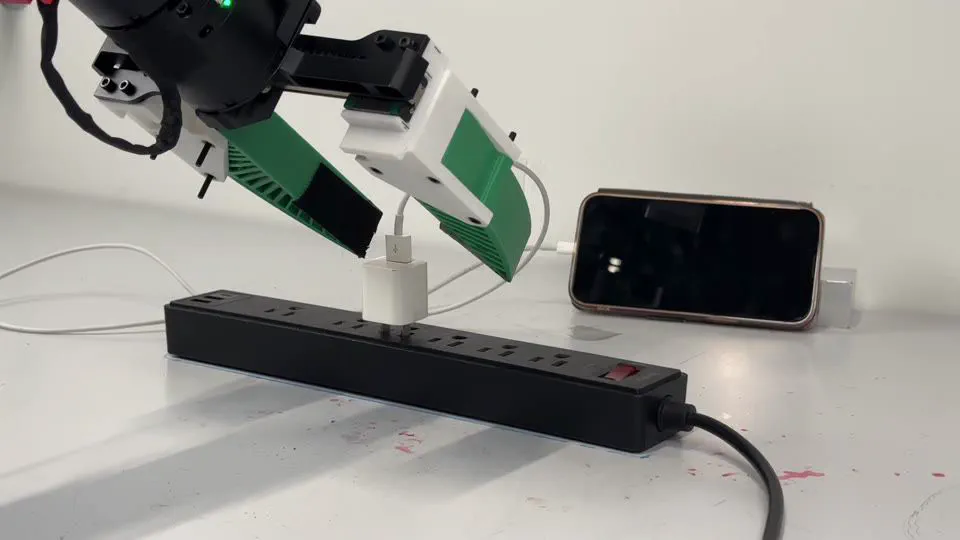
His research focuses on embodied artificial intelligence — vision-language-action models, world models and imitation learning — and how these methods transfer to real robotic manipulation, particularly in contact-rich settings.
- Vision-Language-Action Models
- Large Language Models
- World Models & Generative Models
- Imitation & Reinforcement Learning
- Robotics & Control
- Embedded Systems
ME Computational Science and Engineering
Harvard University
BS Computer Engineering
University of Illinois Urbana-Champaign
BEng Electronic and Computer Engineering
Zhejiang University
I’m a master’s student in Computational Science and Engineering at Harvard University. My research focuses on embodied artificial intelligence — vision-language-action models, world models and imitation learning — and how these methods transfer to real robotic manipulation, especially in contact-rich settings.
I received my undergraduate degrees through the dual-degree program of the ZJU-UIUC Institute: a B.S. in Computer Engineering from the University of Illinois Urbana-Champaign (High Honors) and a B.Eng. in Electronic and Computer Engineering from Zhejiang University.
Please reach out to collaborate! 😃